
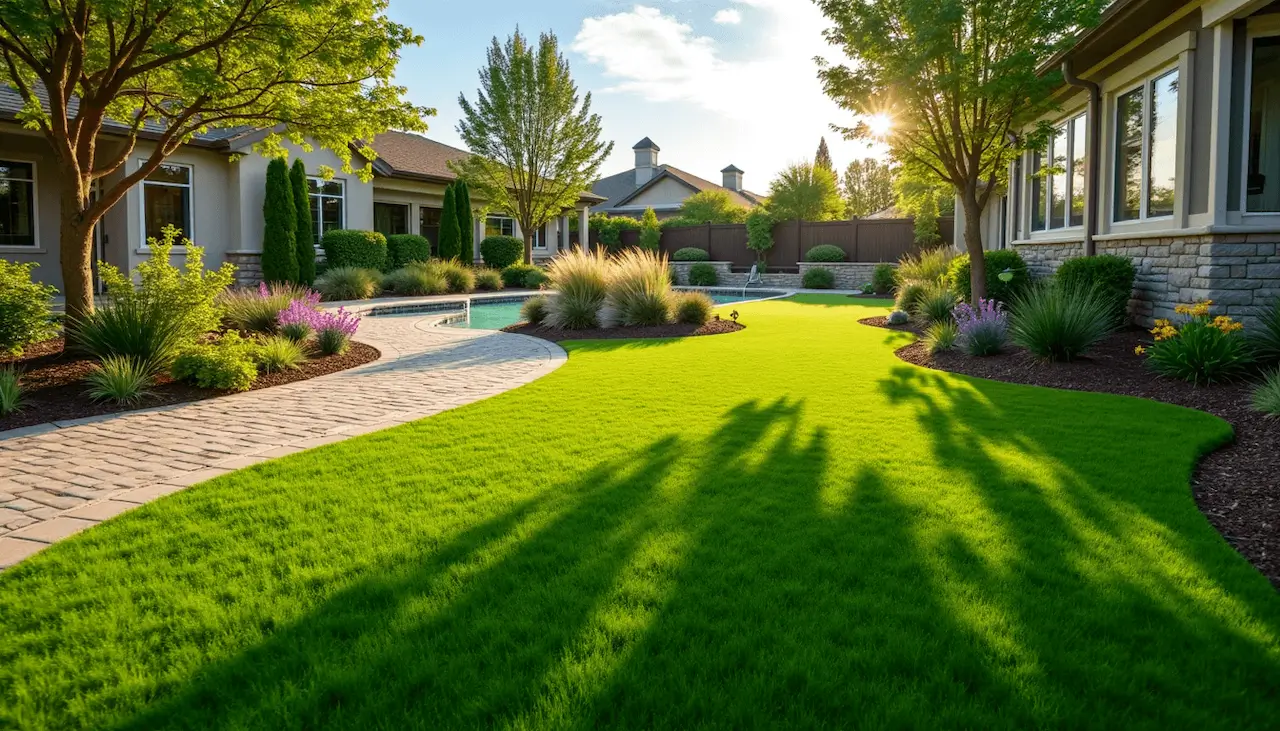
A stunning turf design requires more than simply laying down artificial grass. The key lies in creating a landscape where natural elements blend seamlessly with synthetic ones. Artificial grass helps reduce water usage and maintenance needs, while trees, shrubs, and landscape features complement the design to create an eco-friendly yard that supports local ecosystems and improves air quality.
Our artificial turf design ideas go far beyond basic installation methods. By combining artificial and natural elements, you can improve curb appeal, increase property value, and create an outdoor space that feels like a natural oasis. From winding pathways and native plants to dynamic features like fountains and lighting, every element works together to create a cohesive and inviting landscape.
Understanding Artificial Turf Basics
Modern artificial turf comes in several materials and designs, each suited for different landscape applications.
Types of Artificial Turf
Polyethylene Turf
Polyethylene turf is the premium option because it looks and feels the most like natural grass. It resists odors and maintains its shape even with heavy foot traffic.
Nylon Turf
Nylon turf is the most durable option and holds its shape in extreme conditions. It performs well in hot climates and resists sun damage, making it ideal for athletic fields and high-traffic areas.
Polypropylene Turf
Polypropylene turf is a budget-friendly option but is less durable over time. It works best in smaller areas with lower heat exposure.
Key Components of Natural-Looking Turf
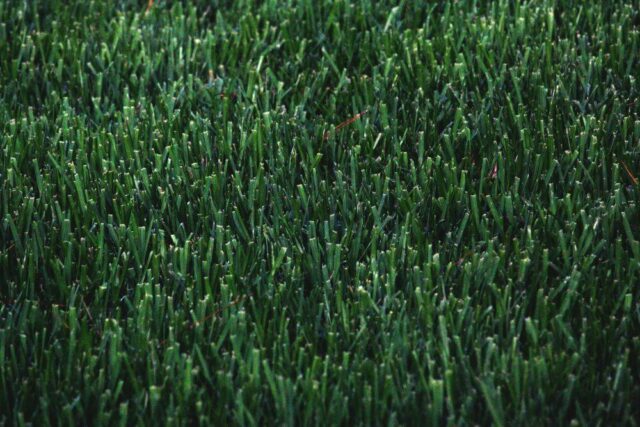
Natural-looking artificial grass relies on a combination of high-quality components. Modern turf systems use polyurethane or latex backing for stability and support. Realistic turf also incorporates different blade shapes, such as Curvy “W” blades and “C” blades, to create a more natural appearance and improve durability. The best artificial grass products combine multiple shades of green with brown or tan thatch layers to mimic the variation found in natural lawns. Face weight — typically ranging from 50 to 110 ounces per square yard — determines turf density and resilience. A thatch layer made from thin gold-colored fibers replicates dead grass found in natural lawns and helps support the turf blades when combined with the proper infill material.
Professional Turf Design Techniques
Professional turf designers understand that creating realistic artificial grass requires attention to color, texture, seams, and transitions.
Color and Texture Selection
Multi-toned artificial grass creates depth and authenticity. The most natural-looking turf combines different shades of green with subtle brown undertones.
Blade shapes also contribute to texture and realism:
- W-shaped blades improve resilience
- S-shaped blades create natural movement
- Diamond-shaped blades enhance durability
- C-shaped blades provide excellent support
Creating Natural Patterns
S-shaped seams help create smooth, seamless transitions between turf sections. These wave-like cuts reduce visible seam lines and improve durability in high-traffic areas. Puzzle seams are another advanced option, creating interlocking connections that help prevent edge separation over time.
Edge Design and Transitions
Natural-looking turf edges require thoughtful design. Mosaic-style borders and curved transitions help artificial grass blend more naturally into surrounding landscapes. Decorative stones or pebbles along the edges add visual appeal while defining boundaries. Wooden bender boards are also effective for curved edges and cottage-style landscapes. Solar-powered lighting along borders improves safety and creates a beautiful nighttime atmosphere. Metal edging provides clean, modern lines while maintaining durability.
Smart Installation Methods
Long-lasting artificial turf starts with proper installation and ground preparation.
Ground Preparation Steps
The process begins by removing existing grass and soil to a depth of approximately 2–3 inches. All vegetation, rocks, and debris should be cleared from the site. Applying weed control before installation helps prevent future growth through the turf surface. A compacted base of crushed stone or decomposed granite — typically around 3 inches deep — creates proper drainage and a stable foundation. Multiple passes with a plate compactor or roller ensure the base is fully compacted and ready for turf installation.
Proper Infill Techniques
Correct infill application helps artificial turf maintain a natural appearance and long-term stability. A standard installation typically uses approximately two pounds of infill per square foot.
Popular infill options include:
- Silica sand for general landscaping
- Wonderfill with anti-microbial coating for pet areas
- Zeofill for high-rainfall environments
- Corkonut blends for temperature regulation
A drop spreader evenly distributes the infill material across the turf surface, while power brooming works the infill deep into the fibers. The infill level should remain slightly below the grass blades to help them stay upright and maintain a natural appearance. The installation process finishes with power brushing, which evenly settles the infill and provides additional blade support.
Enhancing Natural Appearance
Artificial turf looks best when paired with natural landscape elements that add depth, texture, and seasonal interest.
Adding Landscape Features
Trees and shrubs help create a balanced, harmonious outdoor environment. Combining tall trees, flowering shrubs, and seasonal plants adds visual variety and authenticity. Water features such as ponds and fountains bring movement and tranquility to artificial turf landscapes. Rock gardens and natural stone pathways create contrast against the turf surface, while raised plant beds filled with native species support local wildlife and pollinators. The combination of smooth turf with varied textures and plant life creates a layered landscape that feels natural and inviting.
Lighting Considerations
The right lighting placement can transform artificial turf spaces into beautiful nighttime retreats.
Outdoor lighting serves several important purposes:
- Uplighting for trees and architectural features
- Pathway illumination for safety
- Ambient lighting for evening enjoyment
Smart lighting placement extends the functionality of artificial turf well beyond daylight hours.
Solar-powered lighting offers an energy-efficient solution while enhancing the texture and color of synthetic grass. The interaction of light and shadow can dramatically improve the natural look of the entire landscape.
Conclusion
Artificial turf design requires a balance of technical expertise and creative vision to create beautiful, functional outdoor spaces. Thoughtful material selection, professional installation techniques, and the integration of natural elements all contribute to a landscape that looks authentic while reducing maintenance needs. From multi-toned turf blades and proper infill application to strategically placed plants, pathways, and lighting, every detail plays a role in creating a cohesive environment. Whether you’re designing a small residential backyard or a large commercial landscape, careful planning and professional installation make all the difference. Omni Landscape and Sprinkler’s experienced team can help bring your vision to life with custom artificial turf designs built to look natural and perform beautifully for years to come.
Related Content:
Is artificial turf suitable for homes with pets?